
Introduction
Choosing the right school district is the single most important decision Seattle homebuyers make in 2026. This guide ranks 10 districts across three tiers, explains how schools drive home prices, and helps you match the right neighborhood to your family's priorities — so you can buy with confidence, not guesswork.
If you're buying a home in Seattle as a family, one decision will shape everything else: the school district. And here's what most buyers get wrong — they rely on rankings they looked up three or four years ago. In 2026, those numbers have changed significantly. Some districts have climbed fast. Others have quietly slipped. A few neighborhoods that used to be dismissed as "bad school areas" now post scores that rival the suburbs.
If you're still weighing whether Seattle is the right city for your family at all, start with our guide on whether moving to Seattle makes sense for you. If you're also open to other parts of the state, our breakdown of the 10 best cities to live in Washington covers the full metro picture.
This guide breaks down the 10 most relevant school districts in the Seattle metro area across three performance tiers — with honest housing insights, price context, and actionable advice for families making a move in 2026. All rankings are drawn from the Niche 2026 Seattle Metro Area School District Rankings and cross-referenced against the Niche 2026 Washington State Rankings.
How to Evaluate School Districts in Seattle
Use Niche for district-level rankings and GreatSchools for individual school scores — but never rely on the composite number alone. A July 2025 methodology change caused many GreatSchools scores to jump artificially, so comparing the Test Score and Student Progress dimensions separately gives a far more accurate picture of how a school actually performs.
Before diving into rankings, it's important to understand how to read them — and what the numbers actually measure.
The Tools That Matter
Niche is the primary ranking platform used throughout this guide. It aggregates state standardized test scores, college acceptance rates, graduation rates, teacher quality, and real reviews from students, parents, and staff. Rankings update every September. The data referenced here reflects the Niche 2026 release.
GreatSchools is the go-to tool for individual school scores. Crucially, GreatSchools updated its scoring methodology in July 2025, removing the "Equity Rating" from the overall score and lowering the threshold for schools to receive a rating at all. This is why many schools appear to have jumped two or three points compared to prior years — it's partly a methodology change, not purely a performance improvement.
When reading GreatSchools scores, don't just look at the overall number. Look at three dimensions separately:
- Test Score— state standardized exam results, the most direct academic signal
- Student Progress Score— how much students improve year over year, relative to peers with similar backgrounds; this is the least affected by demographics and the most reflective of actual teaching quality
- College Readiness Score— AP/IB participation, graduation rates, and college enrollment
What Ratings Don't Tell You
Rankings measure outputs, not fit. A high-scoring school with no arts program is a poor match for a creative kid. A district with a 9/10 average might have one standout school and eight average ones. Before buying, also evaluate:
- Specialized programs— Gifted/HiCap, IB, language immersion, STEM pathways, Montessori, and dual-enrollment (Running Start) availability vary widely
- School boundary accuracy— Zillow's school labels are often wrong or outdated. Always verify your exact address usingGreatSchools' address lookupor the district's official enrollment tool
- Demographic trends— A school whose scores are rising alongside an influx of engaged middle-class families is likely to keep improving. One experiencing declining enrollment is not
- Feeder patterns— Elementary, middle, and high school boundaries don't always align. Confirm the full pipeline before buying
Top 10 School Districts in the Seattle Area: Ranked by 3 Tiers
The five elite districts — Bellevue, Mercer Island, Northshore, Lake Washington, and Issaquah — all carry an A+ Niche rating and deliver consistently strong outcomes from elementary through high school. Below them, Shoreline and Seattle Public Schools offer real value but require address-level research to unlock, while Edmonds, Renton, and Kent trade school quality for lower home prices.
The 10 districts below were selected from within roughly a 45-minute commute of Seattle. Here's how they stack up.
Tier 1 — Elite Seattle School Districts (Niche: A+)
These five districts are the gold standard for the Seattle metro. All carry an A+ Niche rating. Expect strong academics across the board — and home prices to match.

1. Bellevue School District
Bellevue has overtaken Mercer Island to claim the top spot statewide — a rise that reflects both investment and demographic shifts. The district has now held the#1 ranking in Washington State for two consecutive years (2025and2026).
Standout schools:
- International School—#2 in WA State, #65 nationally(US News 2024). IB-focused; per the 2024–25 school profile, 93% reading proficiency and 83% math proficiency
- Newport High School— Top 5 statewide (US News)
- Interlake High School— Top 10 statewide; strong AP & IB curriculum
- Bellevue High School— Top 10 statewide
See the full Bellevue High School rankings on US News. At the elementary level, Somerset, Cherry Crest, and Medina Elementary all rank among Washington State's top schools on SchoolDigger.
School consolidations (2023): The district closed two elementary schools (Wilburton and Eastgate) due to post-pandemic enrollment decline and a ~$30M budget gap. See: school board vote to consolidate|plans revised from 3 to 2 closures|community pushback|middle school plan paused (2024). The broader enrollment decline context explains the financial pressure.
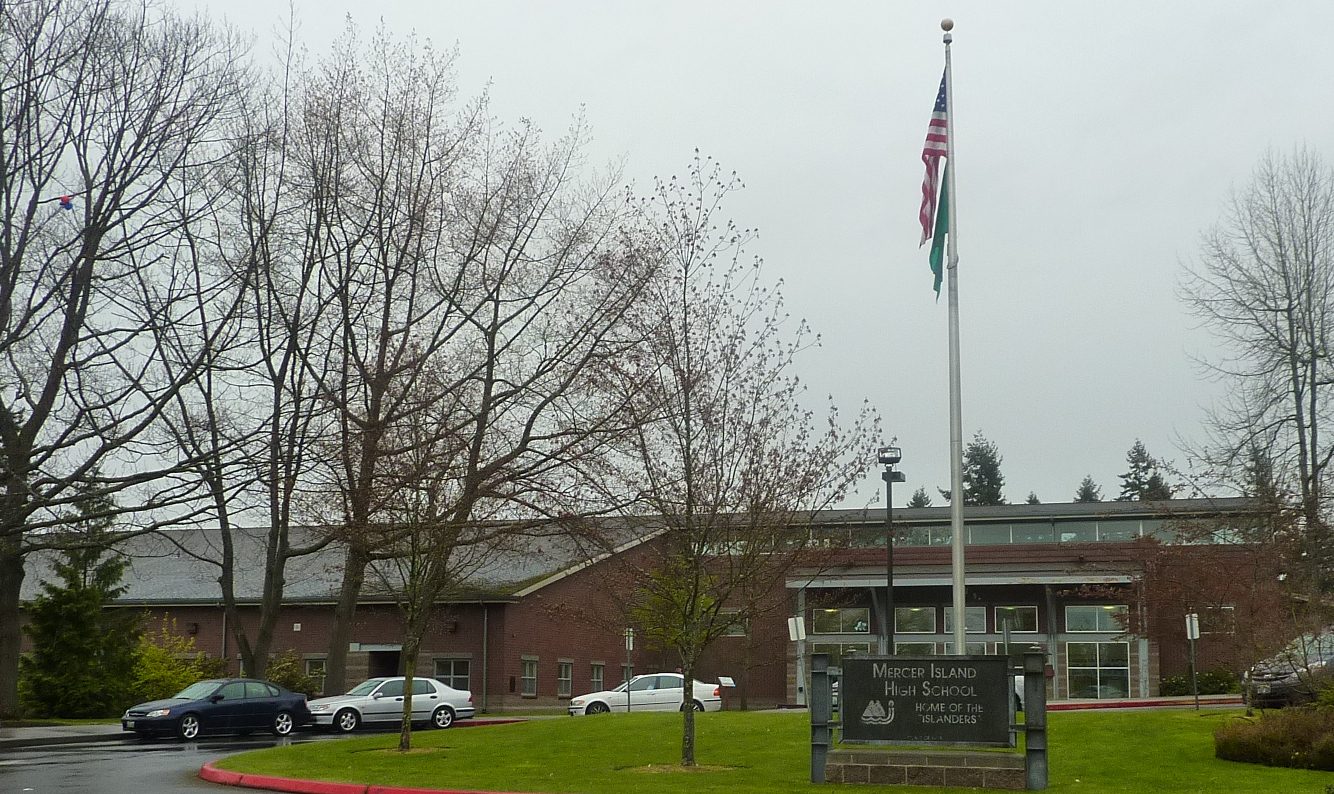
2. Mercer Island School District
Mercer Island's defining feature is its size: just 6 schools, fewer than 4,000 students total. That compactness eliminates the weak-link problem that plagues larger districts. Here, there simply are no underperforming schools.
- Lakeridge Elementary — Top 11 statewide (SchoolDigger)
- Island Park Elementary — Top 10 statewide (SchoolDigger)
- Mercer Island Middle School — 10/10 (GreatSchools)
- Mercer Island High School — #4 statewide (SchoolDigger), 10/10 (GreatSchools), avg SAT 1390, avg GPA 3.65, 95% reading proficiency, 81% math proficiency
"An average student at Mercer Island is better prepared than most. I didn't realize how strong my foundation was until graduate school."— Parent review on Niche
Bottom line: If you buy in Mercer Island, you don't need to stress about which address maps to which school. Every single one is excellent. That peace of mind is part of what you're paying for.
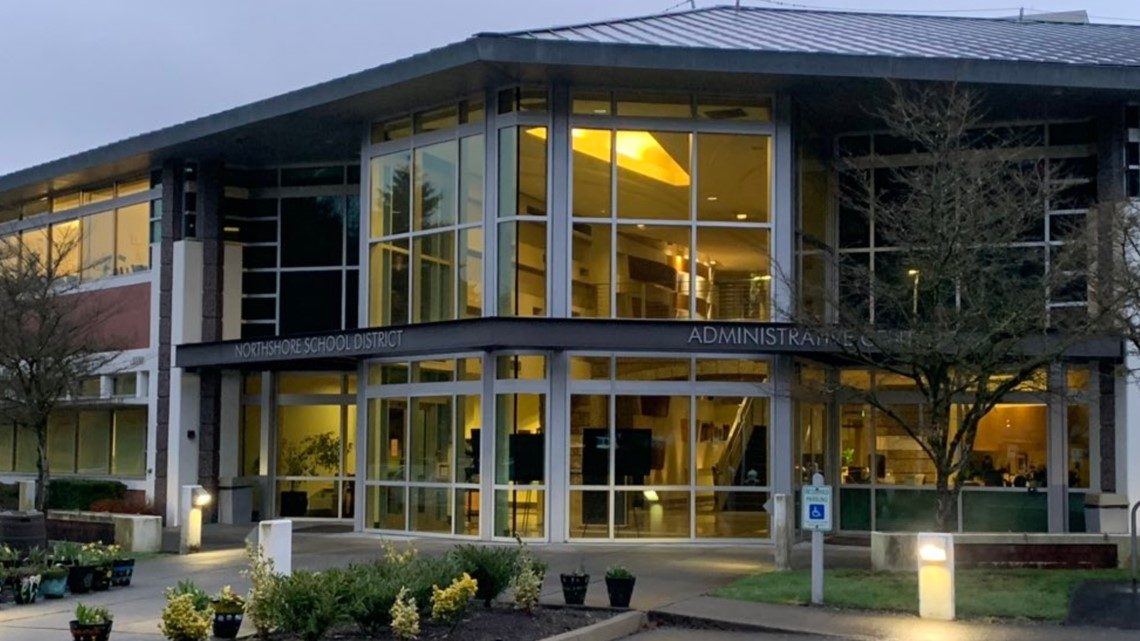
3. Northshore School District
Northshore is the biggest mover in this tier. Five years ago it ranked around #10 in the state. Today it sits at #3 — leapfrogging both Lake Washington and Issaquah along the way.
Why the rise?TheBothell/Kenmore/Woodinvillecorridor has seen a large influx of Indian-American and Chinese-American families, two groups with historically high educational engagement. As parent demographics shifted, school culture, participation, and outcomes followed.
- Woodinville High School — #16 statewide
- North Creek High School — #24 statewide
- Bothell High School — #56 statewide (solid, not elite)
Northshore's strength isn't its ceiling — it's its floor. Combined with housing prices meaningfully lower than those in Bellevue, it represents real value for families who do their homework on specific school assignments.

4. Lake Washington School District
Lake Washington is the most diverse in terms of academic pathways. Two lottery-based specialty schools anchor the top:
- Tesla STEM High School— #1 in Washington State, #18 nationally (US News 2025–2026). 100% AP participation, 99% reading proficiency, 96% math proficiency. Entirely STEM-focused; no sports teams
- ICS (International Community School, grades 6–12)— #3 statewide (Niche 2026). Humanities, international studies, IB program, French language emphasis
Even without winning the lottery, the comprehensive high schools are strong: Eastlake High (Top 10 statewide, US News),RedmondHigh (#12 statewide, Niche), Juanita High (#32 statewide), Lake Washington High (multiple-year GreatSchools College Success Award).
Price advantage:Lake Washington's home prices run slightly lower than Bellevue's while delivering comparable or better outcomes for many students. This may be the best value in Tier 1.

5. Issaquah School District
Issaquah's defining quality is consistency. It has no single school that ranks #1 or #2 statewide, but it also has virtually no weak schools either.
- Issaquah High — #11 statewide; broad AP curriculum
- Liberty High — #19 statewide; strong athletics (3 state championships in 2025)
- Skyline High — #23 statewide; highest IB participation rate of the three (43%)
- Cascade Ridge Elementary —#3 statewide among all Washington elementary schools (SchoolDigger)
Tier 2 — Good Districts with High Internal Variance (Niche: A or A-)
These two districts aren't bad — but they're not consistent. The difference between buying the right address and the wrong one can be dramatic.
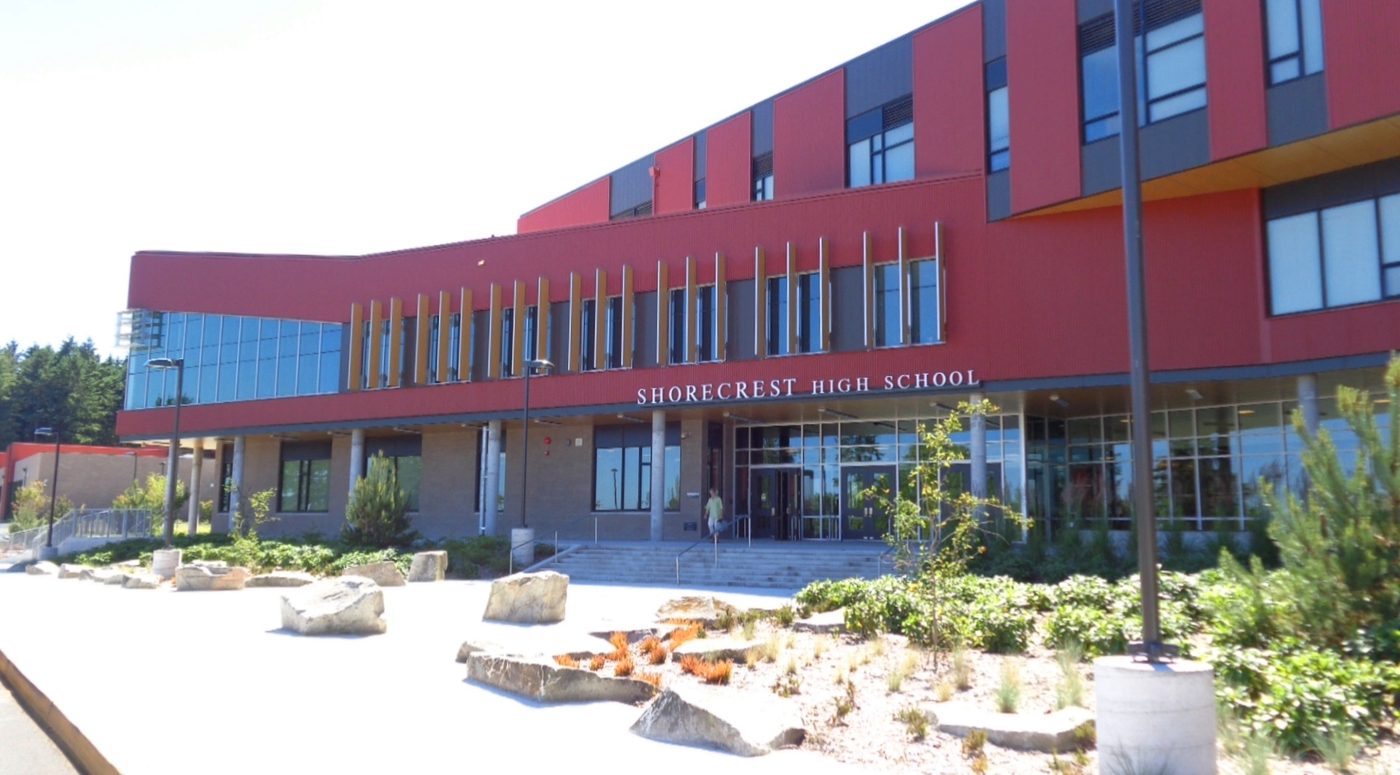
6. Shoreline School District
Shoreline is consistently underestimated. Its Gifted/advanced academic programming is genuinely excellent — competitive with Tier 1 options — but those programs are concentrated in specific schools, not distributed evenly across the district.
- Shorecrest High School— GreatSchools 9/10, Niche A, avg SAT ~1280, 94% graduation rate, multiple-year US News College Success Award
- Shorewood High School— IB program available
- Albert Einstein Middle School— strong academic culture, well-reviewed by parents
Pair Shoreline's strong academics with home prices well below Bellevue and the arrival oflight rail service(Shoreline South/148th and Shoreline North/185th stations), and the value case is compelling for the right family.
7. Seattle Public Schools (SPS)
"Seattle Public Schools is too inconsistent" is a common dismissal — and an oversimplification. Where you live within Seattle determines almost everything.
North Seattle(Ballard, Green Lake, Greenwood, Ravenna, University District):
- Ballard High School— GreatSchools 9/10; nationally recognized engineering and robotics program
- Roosevelt High School— Strong academics; serves Laurelhurst, Wedgwood, Ravenna
- Nathan Hale High School— GreatSchools 8/10; biomedical specialty program
Central Seattle: Garfield High School— IB program; nationally recognized jazz program. Mixed results elsewhere — research by specific address.
West Seattle — the standout story: Schools that once averaged 3–5/10 now routinely score 8–9/10, driven by a sustained influx of middle-class families. A documented pattern of demographic-driven school improvement replicated across multiple Seattle neighborhoods.
SPS also offers the widest variety of specialty programs: language immersion (Spanish, Japanese, Mandarin), Montessori, STEM academies, IB, and arts-focused schools. These require separate applications and are not assigned by address.
Tier 3 — Below Average Overall, with Exceptions (Niche: B)
8. Edmonds School District
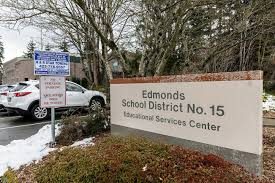
The two strongest high schools — Mountlake Terrace (#47 statewide, US News) and Edmonds-Woodway (#66 statewide, IB available) — are decent but well below Tier 1. One notable bright spot: Challenge Elementary ranks #1 statewide on SchoolDigger — but it is a selective Gifted/HiCap magnet school, not a neighborhood school open to all students.
If budget is the primary driver and your child is several years from high school, Edmonds offers more square footage per dollar than Tier 1/2 equivalents. Track score trends carefully before committing.
9. Renton School District
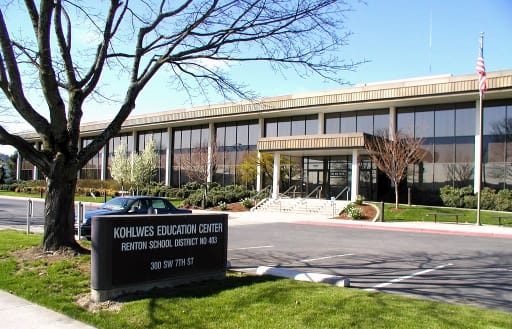
Extremely uneven internally. Hazen Senior High ranks #82 statewide (US News) — serviceable. But Lindbergh ranks #148, and Renton Senior High ranks #211 statewide. If you're buying in Renton, the specific school assignment matters enormously. The difference between two addresses a few miles apart can be two completely different academic environments.
10. Kent School District
The weakest of the three Tier 3 districts overall. Most high schools rank outside the top 100 statewide. Suitable primarily for buyers where schools are not the primary purchase driver, or for families with very young children who have a long runway to reassess before high school.
The one Tier 3 advantage: Home prices. All three Tier 3 districts offer significantly more square footage per dollar than Tier 1/2 equivalents.
How School Districts Impact Home Prices in Seattle
Better school districts command measurably higher home prices — in Seattle, crossing a single school boundary can mean a $75,000–$150,000 difference on otherwise identical homes. This connection is structural, not coincidental: U.S. public schools are funded largely by local property taxes, which means wealthier neighborhoods continuously generate more school revenue and outperform lower-priced areas in a self-reinforcing cycle.
The relationship between school quality and home values is not incidental — it is structural.
Why Good Schools and High Prices Go Together
In the U.S. public school system, a significant portion of school funding comes from local property taxes. Higher home values in a given area generate more tax revenue, which funds better facilities, higher teacher salaries, and stronger programs. The cycle is self-reinforcing: wealthy areas attract strong schools; strong schools attract wealthy families; wealthy families drive up home prices.
This is why Bellevue, Mercer Island, and Lake Washington — the most expensive markets in the metro — also have the highest-ranked schools. It's not a coincidence. It's by design. If you want to understand how this dynamic plays into the long-term investment case for Seattle real estate, our guide on whether buying a house in Seattle is a good investment goes deeper into the numbers.
What It Looks Like in Practice
- Homes within the Bellevue School District carry a premium of roughly 10–20%over comparable homes just outside the boundary
- Crossing from a 6/10 SPS zone to an 8/10 SPS zone within the same Seattle neighborhood can represent a $75,000–$150,000 price difference
- West Seattle home prices appreciated alongside school score improvements — families bid up addresses as ratings rose, not after they peaked
Real Examples: Schools That Have Transformed
The 98034 zip code (Kirkland, within the Northshore District) is a documented case. John Muir Elementary scored in the 4–5 range just a few years ago; it now posts a 7/10 overall with an 8/10 test score. Kamiakin Middle School moved from 4–5 to an 8/10 overall, 9/10 test score. The driver: rising home prices attracted more middle-class families, transforming the school community from the ground up.
The Opportunity: Buy Before the Scores Peak
When a neighborhood's school scores are rising— driven by an incoming middle-class population — home prices often haven't fully caught up yet. Watch for:
- New residential developments attracting professional families
- Test scores trending upward over 2–3 consecutive years
- Increasing parent engagement (school PTA growth, Open House attendance)
- Rising home prices beginning to draw attention — but not yet fully priced in
Best Areas to Buy a Home Based on Your Needs
The right neighborhood depends on your budget, your child's academic profile, and how much address-level research you're willing to do before buying. Families prioritizing top-tier consistency should target Bellevue or Mercer Island, while those balancing quality and value will find the strongest options in Northshore, Shoreline, and West Seattle.
If Budget Is Your Top Priority
→ West Seattle (SPS) or Shoreline School District. West Seattle offers improved 8–9/10 school scores at prices well below those in North Seattle. Shoreline adds light rail access and A-rated academics at below-Bellevue prices. Both punch above their weight.
If You Want the Best Schools, No Compromises
→ Bellevue or Mercer Island.Bellevue has depth, range, and multiple elite high schools. Mercer Island for consistency — no weak links anywhere in the pipeline. Both come at a significant price premium.
If You Want Value in a Strong District
→ Northshore (Bothell/Kenmore/Woodinville) or Lake Washington (Kirkland/Redmond). Both are A+ rated, with home prices noticeably below Bellevue. Northshore is on a strong upward trajectory. Lake Washington offers more school diversity, including lottery-based elite options.
If Your Child Has a Specific Academic Profile
- STEM-focused, high-achiever→ Lake Washington (Tesla STEM lottery) or Bellevue (International School IB)
- Humanities / international-minded→ Lake Washington (ICS), or SPS (GarfieldIB)
- Gifted/HiCap learner on a budget→ Shoreline (strong gifted program) or Northshore HiCap pathway
- Well-rounded athlete + academic→ Issaquah (Liberty, Skyline); strong in both
If You're Not Sure Yet (Young Children)
→ Issaquah or Northshore. Both offer consistent quality across all grade levels without requiring you to pick the "right" address within the district. Lower-stress, lower-price entry point than Bellevue or Mercer Island.
Tips for Buying a Home in a Top School District
Always verify your exact address before making an offer — the school a home is actually assigned to matters far more than the district name on the listing. Zillow and Redfin school labels are frequently outdated or wrong, so cross-check every address on the district's official enrollment tool and GreatSchools before you commit.
1. Set Your Budget First, Then Filter by Schools
Don't start with the school and work backward — you'll end up over-budget or fixated on an unachievable target. Define your price range, then use Redfin's school district filter to find the best-rated options within it. If you're still early in the homebuying process, our complete guide to buying a house in Seattle covers everything from mortgage prep to closing costs before you start filtering by school zone.
2. Focus on Test Scores Over Overall Ratings
On GreatSchools, separate the Test Score and Student Progress Score from the composite number. Given the July 2025 methodology change (removal of equity ratings from total score), the composite number has shifted significantly for many schools. The test score and progress score are more stable and meaningful.
3. Verify Your Exact Address — Every Time
Zillow school labels are frequently inaccurate. The only reliable methods are the district's official enrollment tool or GreatSchools' address lookup. Cross-reference with Niche's school district map for a second opinion. Do this before making an offer, not after.
4. Visit the School in Person
A school's physical environment — the upkeep of facilities, the atmosphere at pickup, the parent culture — tells you things no rating can. If you're seriously considering a neighborhood, attend the school's Open House. Talk to current parents. Spend 20 minutes on the Nextdoor or Facebook parent group for that zone.
5. Watch the Trend, Not Just the Rank
A school ranked #40 statewide and rising is a better bet than one ranked #15 and declining. Track individual school score histories on GreatSchools and SchoolDigger. Rising student population, improving test scores, and active parent communities are leading indicators of continued improvement.
6. Understand Lottery Schools Before Buying
Tesla STEM and ICS in the Lake Washington district are not address-based. Buying a home in their attendance zone does not guarantee admission. Have a clear plan for your child's education if the lottery doesn't go your way.
7. Don't Overlook the Feeder Pattern
Your child won't always be in elementary school. Map out the full pipeline — elementary to middle to high school — before committing to an address. Sometimes a great elementary school feeds into a mediocre middle school, which is the kind of thing that doesn't show up in district-level rankings.
8. Work With a Local Expert Who Knows School Boundaries
School zone data on consumer portals is frequently stale or wrong. A Seattle buyer's agent who specializes in family relocations will know which streets sit on boundary lines, which addresses are currently contested, and which neighborhoods are trending up. Read our guide on how to choose the right realtor in Seattle, and browse our list of the best realtors in Seattle for family home purchases.
Conclusion
Choosing a school district in Seattle is both an educational and a financial decision — get it right and you protect your child's future and your investment simultaneously. The families who win in this market are the ones who look beyond headline rankings and buy into neighborhoods where school scores are still rising, not ones where the premium is already fully priced in.
What This Guide Covered
This guide ranked 10 school districts across the Seattle metro into three tiers based on Niche 2026 data. Tier 1 — Bellevue, Mercer Island, Northshore, Lake Washington, and Issaquah — all carry an A+ rating and deliver consistent, high-quality outcomes from elementary through high school. Tier 2 — Shoreline and Seattle Public Schools — contain genuinely excellent options but require address-level research to unlock their value. Tier 3 — Edmonds, Renton, and Kent — rank lower overall, though each has a handful of standout schools worth knowing if budget is the primary constraint.
We also showed how school quality and home prices move together structurally, why the GreatSchools scoring change in July 2025 inflated many composite scores, and how neighborhoods like West Seattle and the 98034 corridor in Northshore have undergone genuine academic transformations driven by demographic shifts — not just rating adjustments.
Why This Matters Beyond Rankings
A school district isn't just a number on a website. It is the community your child will grow up in, the peer group that will shape their ambitions, and the academic foundation that travels with them for life. It's also, in practical terms, one of the most powerful drivers of long-term home value in the Seattle market. Getting this decision right means doing more than reading a top-10 list — it means verifying your exact address, understanding feeder patterns, watching score trends over time, and reading the human signals that data can't capture.
For families who are also thinking about when to enter the market or eventually sell, timing matters too. Our guide on the best time to sell a house in Seattle breaks down the seasonal and market dynamics that affect both sides of the transaction.
Work With Someone Who Knows These Neighborhoods
At Maggie Sun Real Estate, we specialize in helping families — especially those relocating from out of state or navigating Seattle's market for the first time — find the right home in the right school zone. We know which streets sit on boundary lines. We know which neighborhoods are in the middle of demographic shifts. And we know how to read the data behind the data.
If you're planning a move in 2026 and want your school district decision backed by real, current, on-the-ground knowledge, we'd love to help.
👉 Schedule a Free 30-Min ConsultationFAQs of Best School Districts in Seattle
What are the best school districts in Seattle for families in 2026?
Why did so many school ratings go up in 2025–2026?
Does buying in a good school district actually increase home prices?
Is Bellevue worth the price premium for families?
Can my child attend a school outside our attendance zone in Seattle?
How do I find out which school my address is assigned to?
Which Seattle area neighborhoods have the best combination of school quality and home value in 2026?
Maggie Sun
Managing Broker | Buy, Sell & Invest Seattle & Bellevue | Maggie Sun Real Estate Group
or another way