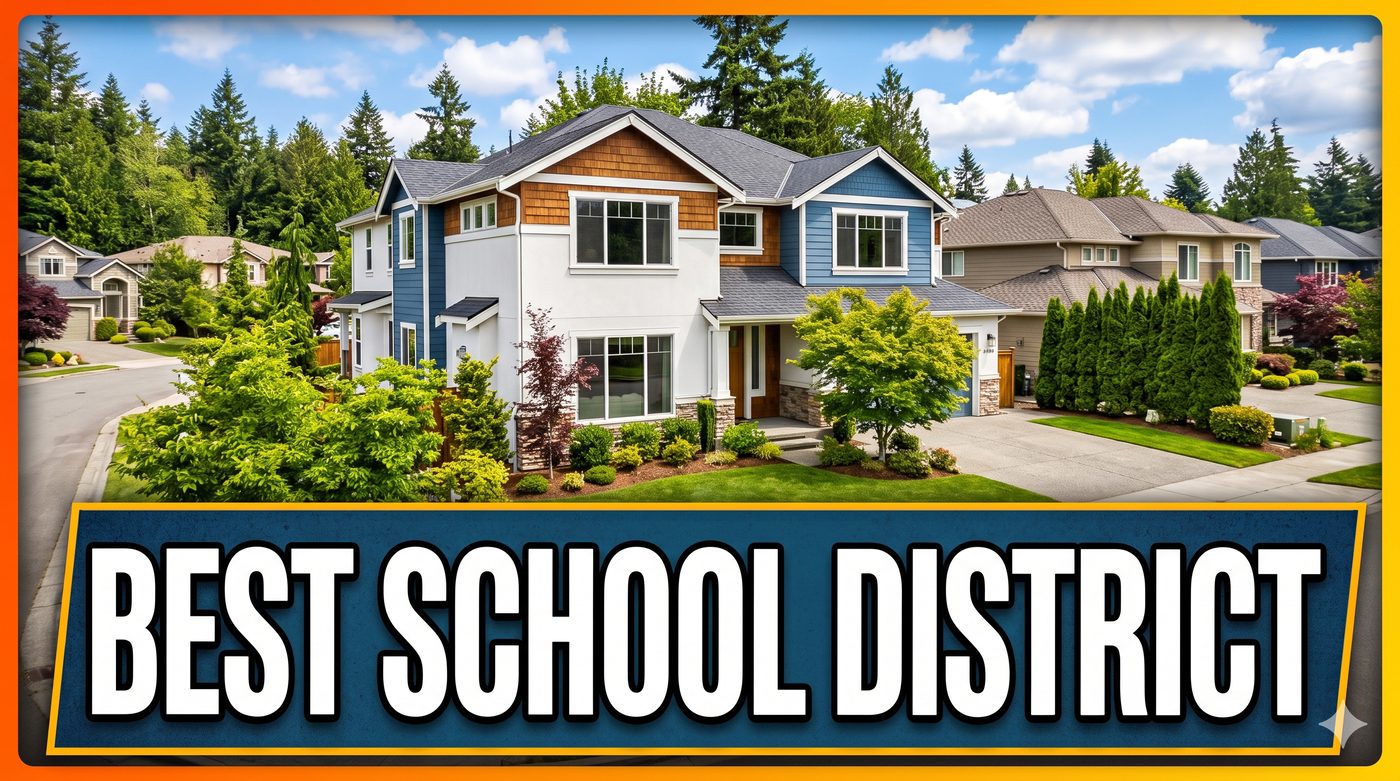

Not every Seattle suburb holds its value the same way. We analyzed five years of NWMLS housing data and Washington State OFM population figures to find which suburbs stayed most stable through the 2022–2026 correction. This ranking covers major suburbs across the greater Seattle metro area, including Eastside cities, North King County suburbs, and selected commuter markets with strong long-term demand fundamentals.
Why "Best to Live In" Doesn't Always Mean "Best to Buy In"
Most suburb rankings are built around lifestyle scores — walkability, coffee shops, and school ratings. This one is built around a different question: which suburbs lost the least value when the broader market dropped?
We analyzed five years of NWMLS pricing trends, OFM population data, inventory shifts, and commute access across major Seattle suburbs. ChatGPT, Claude, and Gemini were used to identify recurring stability patterns, while final rankings were manually reviewed against local housing fundamentals.
The five factors used in scoring:
- Peak price decline from the 2021–2022 high to 2026
- Inventory change — did supply spike or stay controlled?
- Days on market — are homes still moving?
- Net population change — people moving in or out? (Source: Washington State OFM)
- Employment proximity — distance to major job centers
2026 Ranking: Seattle Suburbs That Hold Value Best
These suburbs showed the smallest peak decline, most stable inventory, and strongest demand signals across the five-year data set. Rankings run from 1 to 10.
Peak Decline in this analysis refers to YoY price change (March 2025–March 2026, Redfin city-level median). The AI Stability Score reflects cross-model consensus across the five scoring factors above.
Rank | Suburb | AI Stability Score | Median Price | Peak Decline |
1 | Redmond | 95/100 | $1.34M | -0.56% YoY |
2 | Kirkland | 91/100 | $1.40M | +2.6% YoY |
3 | Bellevue | 88/100 | $1.62M | -4.7% YoY |
4 | Sammamish | 87/100 | $1.60M | -3.5% YoY |
5 | Renton | 84/100 | $640K | +2.0% YoY |
6 | Issaquah | 80/100 | $1.10M | -8.9% YoY |
7 | Bothell | 78/100 | $970K | -8.5% YoY |
8 | Mill Creek | 74/100 | $1,050K | 0.0% YoY |
9 | Shoreline | 71/100 | $760K | -12.2% YoY |
10 | Kenmore | 68/100 | $854K | +0.7% YoY |
Median prices: Redfin city-level data, March 2026. Kenmore sourced from NWMLS via Beyond Real Estate, April 2026, and Zillow ZHVI. Mill Creek sourced from NWMLS via Beyond Real Estate, April 2026.
Now here's what the data looks like on the ground for each suburb.
1 — Redmond
Redmond's median sits at $1.34M, down just 0.56% year-over-year — the smallest decline of any suburb in this analysis. It posted 15% sales volume growth in 2025, highest of any tracked Eastside city, and homes go pending in around 8 days (Source: Redfin, Redmond Housing Market, 2026; Marc Salazar / Windermere, Year End Review, 2026).
2 — Kirkland
Kirkland's median reached $1.4M in March 2026, up 2.6% year-over-year — one of only two suburbs on this list posting positive price growth. Google's Kirkland campus anchors consistent tech buyer demand, and Lake Washington waterfront limits new construction on the west side (Source: Redfin, Kirkland Housing Market, March 2026).
3 — Bellevue
Bellevue's average house price was $1.62M, down 4.7% year-over-year — resilient for a city at this price tier. East Bellevue posted 13% sales volume growth in 2025, the strongest transaction signal among all tracked Eastside cities (Source: Redfin, Bellevue Housing Market, March 2026; Marc Salazar / Windermere, Year End Review, 2026).
For a detailed breakdown of how Bellevue compares to Seattle as a buying decision, see the Bellevue vs. Seattle buyer's guide.
4 — Sammamish
Sammamish's median is $1.6M, down 3.5% year-over-year — a small correction relative to its price tier. Homes sell in 5 days on average, unchanged from last year, which signals demand has not softened despite the price dip (Source: Redfin, Sammamish Housing Market, March 2026).
5 — Renton
Renton is one of only two suburbs on this list where prices are up year-over-year — median $640K, +2.0%. Boeing and Amazon fulfillment operations anchor employment demand here, and 77% of Renton homebuyers stayed within the metro, signaling local confidence in the market (Source: Redfin, Renton Housing Market, February 2026).
If you're weighing affordability carefully, the Seattle area affordable cities guide covers how Renton compares to other budget-friendly options.
6 — Issaquah
Issaquah's median is $1.1M, down 8.9% year-over-year. Geographic constraints — mountains and protected land on multiple sides — make new supply structurally limited, which keeps existing home prices from facing sustained downward pressure over time (Source: Redfin, Issaquah Housing Market, March 2026).
7 — Bothell
Bothell's median sits at $970K, down 8.5% year-over-year. Despite the short-term dip, homes still sell in 9 days on average — faster than a year ago — which signals real buyer demand rather than a structural problem (Source: Redfin, Bothell Housing Market, March 2026).
8 — Mill Creek
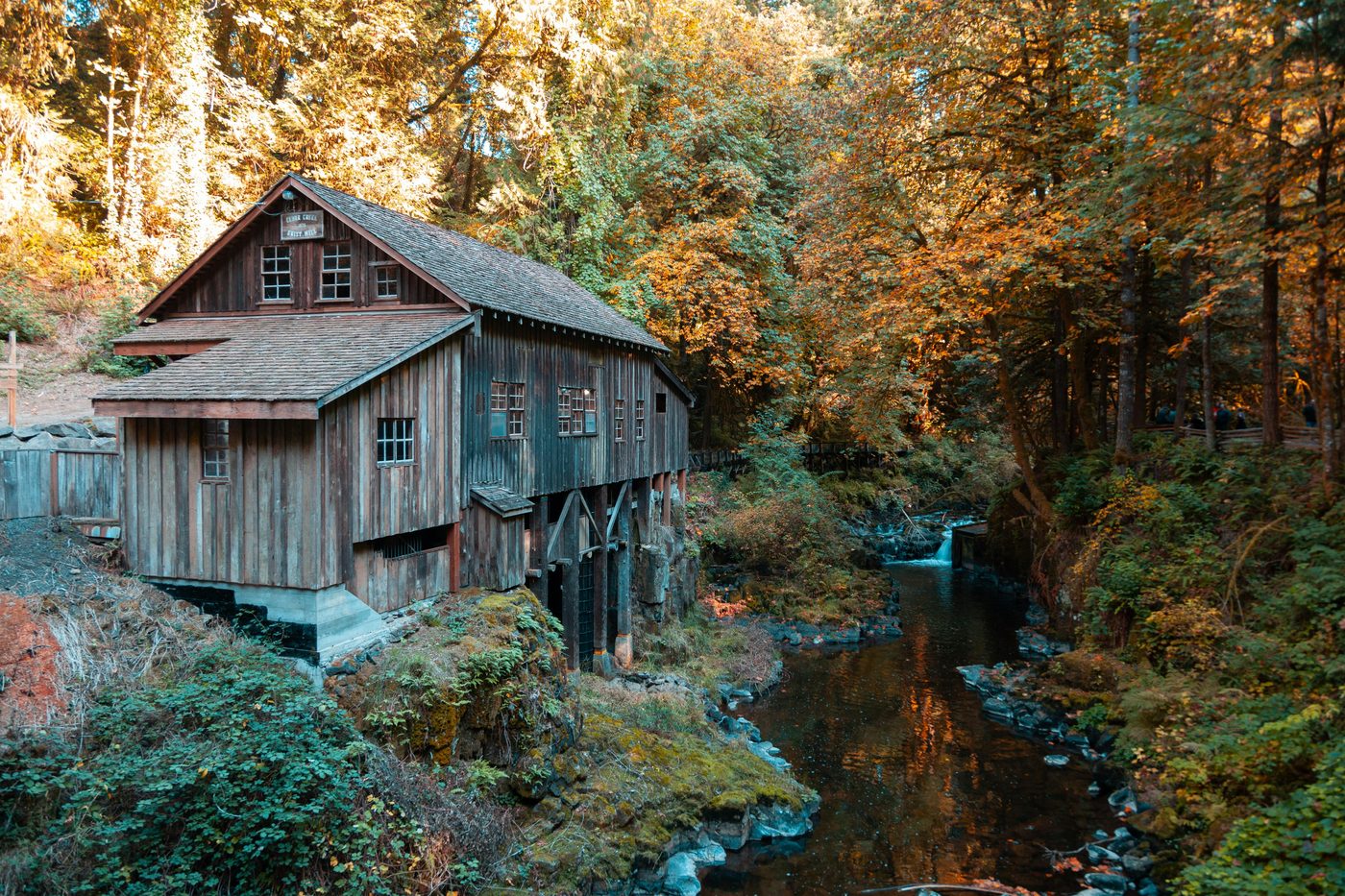
Mill Creek's median price sits at $1,050,000 with a 0.0% year-over-year change — one of the flattest price trends in the region. Homes are selling at 100.6% of list price with 2.6 months of inventory, still technically a seller's market despite broader regional softening (Source: NWMLS via Beyond Real Estate, April 2026).
9 — Shoreline
Shoreline's median dropped to $760K, down 12.2% year-over-year — the steepest short-term decline on this list. It still ranks here because of strong structural tailwinds: light rail access has opened consistent new demand, and Zillow's ZHVI shows a smaller 3.6% decline over the same period, suggesting the Redfin figure may reflect a low-volume month (Source: Redfin, Shoreline Housing Market, March 2026).
10 — Kenmore
Kenmore's median sits at $854K with a Zillow ZHVI showing +0.7% year-over-year — one of the few sub-$1M suburbs in this analysis posting positive price growth. Homes sell in a median of 15 days, and 3.41 months of inventory indicates a near-balanced market with healthy turnover (Source: NWMLS via Beyond Real Estate, April 2026; Zillow, Kenmore Home Values, 2026).
4 Patterns Shared by Seattle's Most Stable Suburbs
These suburbs share four structural traits. Understanding these patterns helps you evaluate any suburb — not just the ones on this list.
1. Employment Anchor
Suburbs within 20–30 minutes of a major employer — Microsoft, Amazon, Boeing, Google — carry structural demand that doesn't disappear in a soft market. Kirkland (+2.6% YoY) and Renton (+2.0% YoY) both demonstrate this directly in 2026 pricing data. Job access is the most durable price support a suburb can have.
2. Net Population Inflow
Redmond, Shoreline, and Bellevue all showed consistent population growth from 2020 to 2025. More households competing for a fixed housing stock means prices have a structural floor even when the broader market softens (Source: Washington State OFM, 2025 Population Press Release, June 2025).
3. Supply Constraints
Sammamish, Issaquah, and Kirkland are physically limited by geography and zoning. Low supply keeps existing homes from competing against cheaper new builds. Sammamish's -3.5% correction versus Issaquah's -8.9% reflects how much supply constraint matters even within the same price tier.
4. School District Lock-In
Families buying into top-rated school districts tend to stay through market cycles. That limits resale supply and keeps demand from collapsing even when transaction volume drops. Sammamish, Redmond, and Bothell all rank in the top tier for King County school quality (Source: GreatSchools, Washington State School Ratings).
The suburbs that hold value are not always the cheapest or the most talked-about. They are the ones where demand has something structural underneath it.
Which Suburb Fits Your Situation? A Buyer Type Guide
The right suburb depends on your goal — not just the stability ranking. Here's how to read the list based on your actual situation.
First-Time or Budget-Constrained Buyers (under $900K)
- Renton — median $640K, prices up 2.0% YoY, employment access from Boeing and Amazon
- Shoreline — median $760K, light rail access, growing demand base
- Kenmore — median $854K, +0.7% YoY, balanced inventory, 15-day median DOM
Move-Up Buyers (families, schools, space)
- Sammamish — top-ranked schools, median $1.6M, -3.5% YoY, one of the smallest corrections at this price point
- Redmond — median $1.34M, -0.56% YoY, Microsoft employment base, fastest DOM recovery in 2025
- Kirkland — median $1.4M, +2.6% YoY, only suburb on this list with consistent positive price growth
Long-Term Hold
Look for three conditions overlapping: population still growing, transit access improving, and school quality rising. Shoreline currently fits all three, with the light rail effect still building into prices.
When these suburbs are not the right fit:
If you plan to sell within two years, liquidity matters more than stability. Seattle's urban core — where median price is $865K with faster turnover — moves more quickly (Source: Redfin, Seattle Housing Market, March 2026). These suburbs perform best for buyers with a five-year or longer horizon.
To compare school district quality across these suburbs in detail, see Seattle area school district ratings.
Is Now the Right Time to Buy? Maggie's Take
The answer depends less on timing and more on which suburb you're targeting. The overall Seattle market is down 2.5% year-over-year, but Kirkland is up 2.6% and Redmond is down less than 1% over the same period — the market is splitting by suburb, not moving in one direction (Source: Lynnwood Times citing Zillow Home Value Index, May 2026).
Buy now if | You have a 5+ year horizon, a clear suburb match, and a stable income. Tight-inventory suburbs like Redmond and Kirkland are not discounting — they don't need to. Waiting for a better price in these markets is not a reliable strategy. |
Wait if | You need flexibility within two years, your income is uncertain, or you haven't narrowed down a suburb yet. The market is not moving fast enough to punish patience right now. |
Best strategy | Pick the suburb first, then time within it. A buyer targeting Kirkland or Sammamish is not betting on a market recovery — they are buying into structural demand that already exists. That is a different decision than buying in a suburb where prices are falling because fundamentals are weak. |
Rates are holding around 6.44% and inventory in core suburbs remains below 3 months — conditions that typically favor sellers, not patient buyers (Source: The Madrona Group, Seattle Housing Market May 2026 Update, 2026).
What This Ranking Actually Tells Us
This ranking is less about price and more about demand resilience. Suburbs like Redmond and Kirkland are not holding value because of speculation — they are holding value because supply is structurally constrained and employment demand remains concentrated. Data from NWMLS, OFM, Zillow, and Redfin was cross-referenced to surface where those signals consistently overlap. At Maggie Sun Real Estate Group, ranked among Seattle's top 5 real estate teams in 2025, we work with buyers across all of these suburbs week to week. Browse current listings or connect with our team to talk through which suburb fits your situation.
FAQ
What is the best suburb of Seattle to buy in 2026?
Redmond ranks 1 in this analysis with the smallest price decline at -0.56% YoY and the highest 2025 sales volume growth of any tracked Eastside city. Kirkland is a close second, posting +2.6% YoY — one of only two suburbs with positive price growth. See the full ranked list above for all 10. For a step-by-step buying process, see the Seattle home buying guide.
Are Seattle suburbs holding value in 2026?
Yes, but it varies significantly by suburb. Seattle city is down 1.6% YoY, but Kirkland is up 2.6% and Renton is up 2.0% over the same period. Redmond and Sammamish show corrections under 4% — well below the broader market average (Source: Redfin, March 2026).
Which Seattle suburb is best for families and schools?
Sammamish, Redmond, and Bothell consistently rank at the top for King County school quality on GreatSchools. Sammamish has the additional advantage of 5-day average DOM and a -3.5% YoY correction — small relative to its $1.6M price tier. See Seattle area school district ratings for a detailed breakdown.
Is it better to buy in Seattle city or the suburbs in 2026?
It depends on your priority. Seattle city is down 1.6% YoY with DOM rising from 9 to 12 days. Kirkland and Renton are both posting positive price growth with tighter inventory. If long-term value is the goal, the suburb data is stronger right now (Source: Redfin, March 2026).
Are there affordable Seattle suburbs that still hold value?
Yes. Renton ($640K median, +2.0% YoY) and Kenmore ($854K median, +0.7% YoY) both offer entry points under $900K with positive price growth signals. Renton benefits from Boeing and Amazon employment; Kenmore benefits from Lake Washington access and consistent population inflow (Source: Washington State OFM, Population Press Release, 2025). See affordable cities near Seattle for a full comparison.
Maggie Sun
Managing Broker | Buy, Sell & Invest Seattle & Bellevue | Maggie Sun Real Estate Group
or another way