

Categories
englishPublished April 9, 2026
10 Real Reasons to Live in Seattle in 2026 — What the Data Really Says


Introduction: 10 Real Reasons to Live in Seattle in 2026
Is Seattle worth moving to? The honest answer: it depends entirely on your income and job field. This guide explores 10 genuine reasons to live in Seattle—and reveals why the financial math works brilliantly for some professionals while remaining impossible for others. The median household income is $121,984, yet cost of living is 43% higher than national average. For tech workers earning $120k+, Seattle offers exceptional wealth-building opportunities through high salaries and zero state income tax. For service workers earning under $60k, it remains financially unsustainable. Data from the U.S. Bureau of Labor Statistics, housing experts, and current residents show that reasons to move to Seattle fundamentally hinge on income threshold. This guide provides the decision framework you need.
Let's dig in.
Reason 1: Seattle Tech Jobs in 2026 — High Pay, Tough Competition
High salaries still exist, but landing a job now requires specialization due to layoffs and increased competition.
182,000 tech workers call Seattle home. The city remains one of America's top tech hubs, behind only the San Francisco Bay Area. But the landscape has shifted significantly in 2026.
According to Motion Recruitment's 2026 Seattle Tech Salary Guide, "Seattle's tech ecosystem thrives in cloud, biotech, and clean energy sectors. For job seekers in 2026, emphasize versatility and strong communication."
The numbers are compelling:
- Average tech salary: $186,621 (second only to San Francisco)
- Core tech workers: 182,000+
- AI specialty talent cluster: 3rd largest in the United States (32,965 professionals)
- Tech job openings: 64,014 posted between January-February 2026
What This Means: The $186k average translates to $12,383/month gross income. After taxes (~30%), you net $8,668/month—more than enough to cover Seattle's $3,533 monthly cost of living AND save $5,135/month for down payment or investments. But this advantage only applies if you secure employment. The real challenge: competition has intensified dramatically since 2022 due to layoffs. Job seekers must have specialized skills to secure these premium positions.
However, recent layoffs have complicated this picture significantly. Amazon has laid off 30,000 corporate employees since October 2025. Meta cut thousands in its Reality Labs division. Tech job postings remain below pre-pandemic levels.
⚠️ The Other Side: Seattle Times analysis reveals that Amazon's 30,000 layoffs have flooded the market with 150k+ earning tech workers, creating downward wage pressure for newcomers. Additionally, Brookings Institution research warns that Seattle's tech sector over-concentration creates regional economic vulnerability. When Amazon or major tech companies contract, entire support sectors (restaurants, service, retail) suffer immediate job losses.
The shift is clear: general coding roles face more competition, while data scientists (36% projected growth), security engineers (32% growth), and AI specialists command premium salaries.
Seattle Tech Salary vs Other Major Hubs
| City | Avg Tech Salary | Job Postings Trend | Market Conditions |
|---|---|---|---|
| San Francisco | $215,072 | Declining (layoffs) | Saturated |
| Seattle | $186,621 | Declining (layoffs) | Competitive |
| New York | $160,000 | Stable | Growing |
| Austin | $140,000 | Growing | Hot |
Bottom line: Strong salaries remain, but competition has intensified. Specialization is now essential. Among reasons to live in Seattle, the tech job market is compelling—but only for specialized professionals with proven experience.
Reason 2: Seattle Cost of Living vs SF, NYC & LA — Better Value
Seattle is still expensive, but offers significantly better financial outcomes than other major cities.
While Seattle is undeniably expensive, it offers better value than other premier West Coast cities. This matters if you're choosing where to relocate among high-cost markets. Compare comparable Pacific Northwest cities to understand relocation value.
The data: Seattle's cost of living is 44.5% above the national average. Compare this to San Francisco (50%+ above national), and you see meaningful savings. For high earners, this difference compounds to tens of thousands of dollars annually.
According to CBRE's Scoring Tech Talent report, "Puget Sound offers the second-highest average annual wage for tech talent at $186,621, behind only San Francisco. However, when accounting for cost-of-living differences and Washington's zero state income tax, Seattle's financial outcomes for tech professionals are often superior."
What This Means for Your Decision: If you earn $150k in San Francisco and $150k in Seattle, San Francisco costs $577/month more ($6,924/year extra). Over a 5-year career window, that's $34,620 in additional costs—enough for a 20% down payment on a $175k home in affordable suburbs. Plus, Seattle has zero state income tax while California charges 13.3%, creating an additional $19,950/year advantage on that $150k salary. Combined benefit: $26,874/year in net cost savings.
Seattle vs Major West Coast Cities (Monthly Cost for Single Adult)
| City | Monthly Cost | Housing Cost | State Income Tax | Climate | Verdict for Value |
|---|---|---|---|---|---|
| Seattle | $3,533 | $2,235 rent / $1.06M home | 0% | Mild/rainy | Best value |
| San Francisco | $4,110 | $2,800+ rent / $1.5M+ home | 13.3% | Sunny/expensive | Most expensive |
| New York | $4,203 | $2,800+ rent / $800k+ apt | 6.85% | Cold winters | High density |
| Los Angeles | $3,800 | $2,500 rent / $900k home | 13.3% | Sunny/traffic | Car-dependent |
| Portland | $2,900 | $1,800 rent / $650k home | 9.9% | Rainy/cheaper | Best affordability |
Financial Analysis
If you earn $150,000 annually:
- Seattle: Leaves $90-100k/year for savings and investments
- San Francisco: Leaves $70-80k/year
- New York: Leaves $75-85k/year
If you earn $120,000:
- Seattle: Math works; you're sustainable
- San Francisco: Very tight; requires roommates or significant lifestyle compromises
Key advantage: Washington has zero state income tax. If you earn $150,000 in California, you'd pay $19,950+ annually in state income tax. In Washington, it's $0. That's nearly $20,000/year in savings—enough to offset higher housing costs.
Bottom line: Better value than SF/NYC, but still expensive. Among reasons to move to Seattle, the comparative affordability advantage is significant for high earners—particularly when combined with zero state income tax.
Reason 3: Seattle Weather & Outdoor Lifestyle Year-Round
Mild weather and constant nature access make Seattle one of the most livable outdoor cities in the U.S.
Seattle's weather myth: It rains a lot. The reality: it rains often, but not heavily. Seattle actually receives less annual precipitation than New York, Miami, or New Orleans. The difference is that Seattle rain spreads across more days—light drizzle rather than occasional downpours.
For outdoor enthusiasts, this translates to year-round access without seasonal closures. Explore Seattle neighborhood lifestyle perspectives to understand community quality.
The summer conditions are exceptional:
- July: 75°F, 14.5 hours of daily sunshine, 11% rainy days (score: 9.3/10)
- August: 75°F, 12.9 hours of daily sunshine, 16% rainy days (score: 8.7/10)
- June: 68°F, 13.0 hours of sunshine (score: 8.2/10)
Winter is mild but grey:
- December-February: 40-50°F, frequent overcast skies, but no ice storms, blizzards, or extreme cold requiring specialized winter gear.
According to Bobbie Nickel, Public Affairs Manager for Visit Seattle, "In winter, when the falls are frozen over, it's a thrill both to behold and to get there. Seattle is embracing its status as a city shaped by nature through its 'Mother Nature's City' campaign."
Outdoor Access & Proximity
- Franklin Falls: 1 hour from downtown, 2.2-mile hike to 70-foot frozen waterfall (winter)
- Green Lake Loop: Paved, 2.8 miles, urban, walkable from neighborhoods
- Burke-Gilman Trail: Paved, 27 miles, cycling and walking
- Mountain access: 30+ trails under 45 minutes from downtown
- New light rail (opened March 28, 2026): South Bellevue to Seattle International District, creating faster mountain access
Unlike Phoenix (extreme heat), Chicago (brutal winters), or LA (year-round car dependence), Seattle enables outdoor lifestyle 12 months per year without extreme weather complications.
Bottom line: Mild year-round + no seasonal closures + immediate mountain/water access = genuine outdoor lifestyle for 12 months. If hiking, kayaking, and nature access matter to you, Seattle delivers.
Reason 4: Top Healthcare & Education System in Seattle
World-class institutions create stable careers and long-term professional growth opportunities.
Seattle is home to world-class research institutions that drive stable employment and economic growth.
Healthcare Sector Strength
- University of Washington: Ranked top 10 for medical research nationally
- Healthcare job growth: 19%+ for specialized roles like speech-language pathologists
- Major employers: Swedish Medical Center, UW Medicine, Harborview Medical Center
- Research funding: Significant NIH and government grants flowing through UW Medicine
According to UW Professional & Continuing Education analysis, "Data-driven fields like data science show 36% projected growth, while healthcare roles like speech-language pathologists see 19% growth. Seattle's research institutions provide career stability and advancement opportunities."
Education Ecosystem
The University of Washington (flagship research university, top programs in engineering, medicine, public health, and business) and Seattle University provide a steady pipeline of educated professionals. Between 2021-2023, UW generated 14,107 tech-degree graduates alone—supporting the region's tech talent supply.
For healthcare professionals, researchers, and data scientists, Seattle offers competitive compensation and world-class institutional environments.
Bottom line: World-class institutions = stable employment base + research advancement opportunities. If you work in healthcare, research, or fields dependent on institutional strength, Seattle's ecosystem provides meaningful career advantages.
Reason 5: Seattle Income vs Cost of Living — The $120K Threshold
Seattle is financially viable only above a certain income level, making earnings the key factor. Here's where the Seattle math gets real: median household income is $121,984, and cost of living is $3,533/month.
This looks balanced on paper, but the reality is income-dependent.
Seattle Cost vs Annual Salary by Profession
| Annual Salary | Industry | Monthly Budget | Housing % | Savings Potential | Viability |
|---|---|---|---|---|---|
| $40,000 | Hospitality/Retail | $3,333 | 67% | Negative | ❌ Not viable |
| $60,000 | Service/Admin | $5,000 | 45% | Low | ⚠️ Difficult |
| $100,000 | Mid-career professional | $8,333 | 27% | $3,000/mo | ✅ Manageable |
| $150,000 | Tech/Healthcare senior | $12,500 | 18% | $6,500/mo | ✅ Excellent |
| $200,000+ | Tech executive/Partner | $16,667 | 13% | $10,000/mo | ✅ Very strong |
According to Salary.com's 2026 Cost of Living analysis, "To live comfortably in Seattle, a single adult should aim to earn around $128,000 annually. This reflects the city's higher cost of living—especially for housing and everyday expenses."
What This Means by Income Tier: A $100k earner saves $3,000/month—enough to accumulate $36k/year toward down payment. At this rate, reaching a $200k down payment takes 5.5 years. A $150k earner saves $6,500/month—enabling a $200k down payment in just 31 months (2.5 years). This is why income tier determines Seattle viability more than any other factor. One tier up, and the city transforms from "tight" to "enabling wealth."
Expert Insight from Maggie Sun Real Estate Group
According to Maggie Sun, Founder of Maggie Sun Real Estate Group, one of Seattle's leading luxury real estate firms: "We've worked with hundreds of relocating professionals, and the $120k threshold is very real. Below that income level, our clients consistently struggle with housing affordability and lifestyle quality. Above $150k, especially in tech, clients thrive financially and can leverage Seattle's appreciating real estate market. The income factor is non-negotiable in relocation decisions."
Key Insight
- Above $120k = Seattle math works. You can save money, invest, and build long-term wealth.
- Below $80k = You struggle. Housing consumes unsustainable percentages of income.
- Tech workers average $148k = Comfortable with meaningful savings capacity.
A bartender earning $40,000 would spend 67% of income on housing alone—leaving only $1,333/month for utilities, food, transportation, and everything else. This is unsustainable.
A software engineer earning $150,000 would spend 18% on housing—leaving $6,500/month for everything else. This enables savings, investments, and quality of life.
⚠️ The Other Side: HUD's housing affordability data flags Seattle as a "high burden area" for renters earning under $100k. While technically "affordable" by HUD standards (32% of income on housing), the reality is psychologically exhausting. One job loss = homelessness within 60 days, with zero financial buffer. The income-viability threshold creates a stark two-tier system: comfort for high earners, precarity for everyone else.
Bottom line: Income threshold is real and non-negotiable. Seattle works if you earn $120k+; most service/entry-level workers struggle. This isn't a character flaw—it's simple math.
Reason 6: Educated, Progressive & Diverse Seattle Population
Seattle attracts educated professionals who value culture, diversity, and progressive communities.
Demographics
- 48.6% college-educated (8th highest in the United States)
- Progressive values (LGBTQ+-friendly city with strong Pride events and inclusive policies)
- Diverse immigrant communities (Vietnamese, Chinese, Somali, Indian communities with established neighborhood networks)
- Tech and startup culture (attracts ambitious, growth-minded professionals)
Cultural Vibrancy
- Pike Place Market: Iconic since 1907, representing Seattle's soul
- Music scene heritage: Grunge legacy (Nirvana, Pearl Jam), modern indie music, live venues
- Craft culture: Craft coffee, craft beer (dozens of breweries), fine dining scene
- Arts districts: Ballard (gallery-restaurant mecca), Capitol Hill (LGBTQ+ hub), Pioneer Square (historic arts)
According to local community analysis, "Seattle attracts educated, progressive professionals seeking intellectual community with strong cultural institutions and inclusive values. The city ranked 99th most livable globally and 27th in the United States."
If you thrive in environments with:
- Access to cultural events and arts
- Progressive politics and inclusive communities
- Educated peers with diverse interests
- Strong coffee/food/craft culture
...then Seattle delivers authentically.
Bottom line: If you're seeking an educated, culturally vibrant, progressive community, Seattle isn't just a place to earn money—it's a place where your values align with the community around you.
Reason 7: Seattle Public Transit — Live Without a Car
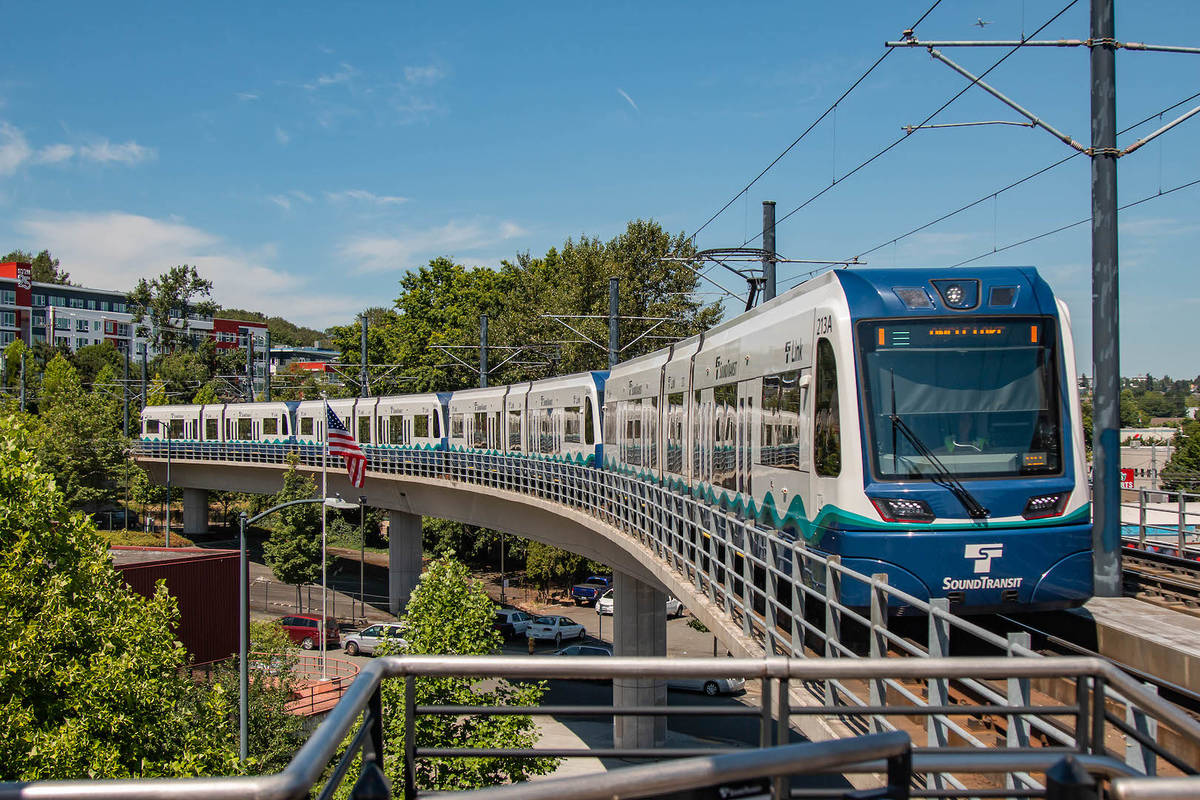
Seattle is one of the few U.S. cities where you can realistically live without owning a car. In most American cities, car ownership is non-negotiable. Not in Seattle.
Transit costs: $99/month (vs. $400-600/month for car ownership including payment, insurance, gas, maintenance)
This is transformative for personal finances.
Key Infrastructure Update (2026)
The new light rail connection between South Bellevue and Seattle's International District opened March 28, 2026. This creates faster travel across Lake Washington and potentially expands where buyers can afford to live while maintaining Seattle access.
According to Workforce Development Council of Seattle-King County market analysis, "The new light rail connection creates faster travel across Lake Washington and potentially expands where some buyers are willing to live, enabling geographic arbitrage for remote workers."
Bike-Friendly Infrastructure
- Burke-Gilman Trail: 27 miles of paved, dedicated cycling infrastructure
- Green Lake Loop: 2.8 miles, urban, walkable from neighborhoods
- Protected bike lanes: Downtown core and expanding through neighborhoods
Car-Free Advantages
- Annual savings from not owning a car: $8,000-12,000
- Environmental benefit: No personal vehicle emissions
- Lifestyle benefit: Less stressful commute, ability to read/work during transit
I've talked to residents who deliberately chose Seattle because they could sell their car and eliminate that expense entirely. One tech worker told me: "I was spending $600/month on car stuff in LA. In Seattle, it's $99/month for transit. That's $6,000/year back in my pocket."
Bottom line: Public transit actually works in Seattle. You genuinely don't need a car. This is rare in America and provides both financial and lifestyle advantages.
Reason 8: No State Income Tax in Washington State
Zero state income tax gives Seattle residents a major financial advantage over other states. This is a profound financial advantage for high earners.
Tax Comparison
- Washington: 0% state income tax
- California: 13.3% state income tax
- New York: 6.85% state income tax
- Most other states: 3-8% state income tax
Quick Calculation for $150,000 Income
- In California: You'd pay $19,950/year in state income tax alone
- In Washington: You pay $0
- Annual savings: $19,950+
That's money you can invest, save for a home down payment, or use for living expenses.
Trade-Off Consideration
Washington has higher sales tax (6.5% in Seattle vs. 8.5%+ in California cities). For property owners, property taxes may offset some of the income tax advantage. But the net effect still favors high earners significantly.
For a $200,000 income earner in California, the state income tax alone is nearly $27,000/year. In Washington, it's zero.
Bottom line: This advantage alone saves high earners $10,000+/year. It's meaningful for long-term wealth building and shouldn't be overlooked when comparing Seattle to California alternatives.
Reason 9: Seattle Real Estate Growth & Investment Potential
For buyers, Seattle real estate remains a strong long-term wealth-building opportunity.
Home Prices
- Single-family median: $1.06 million
- Condos: $800-950k
- Market trend: Still appreciating despite increasing inventory
Market Dynamics (April 2026)
Seattle's housing market is moving into spring with more inventory and steady buyer demand, creating more balance than recent years. Inventory is up 36.1% year-over-year, but demand remains steady.
Seattle Housing Market vs Other Tech Cities
| City | Median Home Price | YoY Change | Inventory Months | List Price % | Appreciation Outlook |
|---|---|---|---|---|---|
| Seattle | $1.06M | +2.1% | 2.1 months | 101.1% | Strong |
| San Francisco | $1.5M+ | +1.5% | 3+ months | 99% | Stable |
| Austin | $650k | +8% | 4 months | 102% | Very strong |
| Denver | $550k | +5% | 3.5 months | 100% | Strong |
According to The Madrona Group's April 2026 Seattle Housing Market Report, "Seattle's housing market is moving into spring with more inventory and steady buyer demand, creating a market that feels more balanced. Inventory is climbing across Seattle, yet prices have remained relatively steady."
What This Means for Wealth Building: If you buy a $1.06M home with $250k down and $810k mortgage at 6% interest: after 10 years of 2% annual appreciation, your home is worth $1.29M. Combined with mortgage principal paydown ($120k), you've built $450k+ in equity on a $250k initial investment—an 80% return. This wealth acceleration is available only to those with sufficient down payment capital.
Expert Insight from Maggie Sun Real Estate Group
According to Maggie Sun, a luxury real estate expert with over 15 years of Seattle market experience: "The Seattle housing market has fundamentally changed since 2020. We're no longer in a sellers' market—it's more balanced. For buyers, this is actually favorable. While home prices have appreciated significantly, there's more negotiating room than we've seen in years. The limited buildable land in Seattle combined with continued tech sector presence creates long-term appreciation potential. We recommend buyers focus on strong neighborhoods with light rail access—that infrastructure alone is a wealth driver."
Appreciation Drivers
- Limited buildable land: Seattle's geography constrains housing supply
- Tech sector presence: Continued employer demand supports prices
- Water/mountain access: Natural amenities support long-term value
Buyer requirements: $250,000+ down payment (20% of $1.06M median)
This is a significant barrier. Most buyers need either:
- Substantial existing wealth
- Dual high incomes enabling joint down payment accumulation
- Inheritance or family financial support
But for those who can afford the down payment, Seattle's real estate has historically appreciated significantly and continues to show strength despite recent layoffs.
Bottom line: For buyers with sufficient capital ($250k+), Seattle offers solid long-term appreciation and wealth-building through real estate. For renters without down payment capital, this reason doesn't apply.
Reason 10: Remote Work in Seattle Enables Cost Savings
Remote work allows you to earn Seattle salaries while reducing living costs significantly.
91% of Seattle employers offer remote work options. This creates a powerful strategy: live in a more affordable suburb, earn Seattle-level tech salary.
Remote work adoption isn't a post-pandemic experiment anymore—it's standard practice in 2026.
Suburb Options With Cost Savings
- West Seattle: 15-20 min commute, $1,900-2,100 rent (saves 10-15% vs downtown)
- Rainier Valley: 20-30 min, $1,800-2,000 rent (saves 15-20%)
- Northgate: 25-35 min, $1,800-2,100 rent (saves 15-20%)
- Beacon Hill: 20-30 min, $1,700-1,900 rent (saves 20-25%)
Combined savings: 15-25% on housing while maintaining downtown Seattle salary.
Strategy Example
A software engineer earning $150,000/year could:
- Work remotely for a Seattle tech company (maintaining $150k salary)
- Live in Beacon Hill (saves $5,000-7,000/year on rent)
- Commute once or twice monthly for in-person meetings
- Redirect savings into investments or down payment fund
According to Motion Recruitment's 2026 analysis, "Remote work flexibility enables Seattle-area workers to live 20-30 minutes outside downtown while maintaining city-level salaries—creating meaningful cost-of-living arbitrage opportunities."
Career Implications
- You keep the $150k tech salary (no pay cut for geographic relocation)
- You reduce housing costs 20-30% (meaningful monthly impact)
- You gain commute flexibility (2 office days/week vs. 5)
Bottom line: Remote work unlocks geographic arbitrage. Same salary, lower costs, better quality of life. This is one of the most underutilized strategies for tech workers considering Seattle relocation.
How to Buy a Home in Seattle in 2026: A Practical Guide
This section directly addresses one of the key reasons to live in Seattle—building wealth through real estate. Here's how to approach it based on your income level and timeline.
Step 1: Determine Your Budget by Income Tier
| Annual Income | Max Affordable Home Price | Down Payment Needed (20%) | Recommendation |
|---|---|---|---|
| $80,000 | $650,000 | $130,000 | Difficult; consider renting or suburbs |
| $120,000 | $1,050,000 | $210,000 | Realistic; emerging neighborhoods |
| $150,000 | $1,310,000 | $262,000 | Strong position; established areas |
| $200,000+ | $1,750,000+ | $350,000+ | Excellent; multi-unit or investment properties |
Step 2: Choose Your Neighborhood by Income & Timeline
💚 If You Earn $80k-100k
Strategy: Rent for 2-3 years, build down payment savings. You're priced out of Seattle proper. Instead, rent in Beacon Hill ($1,700-1,900/mo) or Rainier Valley ($1,800-2,000/mo). Save aggressively: even $500/month = $18,000 in 3 years. Target emerging neighborhoods (Ballard north of 65th, Fremont outskirts) once you hit $120k income.
🟠 If You Earn $120k-150k
Strategy: Buy emerging neighborhoods with light rail proximity; expect 3-5 year appreciation play. You're in the sweet spot. Target Green Lake (walkable, transit, young professionals), Wallingford (charming, $950k-1.1M entry), Eastlake (industrial chic, future light rail 2027), or Ballard north of 80th (tech influx). Explore detailed neighborhood guides to find your ideal fit. Appreciation expectation: 2-3% annually. That's $20k-30k equity yearly from appreciation alone, plus $8k-10k from mortgage paydown.
💙 If You Earn $150k+
Strategy: Invest strategically; buy established neighborhoods with dual upside. You have multiple paths: live in Capitol Hill ($1.3M-1.6M) or Queen Anne ($1.2M-1.4M) for appreciation + lifestyle, OR buy a duplex in Ballard/Green Lake, live in one unit, rent the other—mortgage + rental income approach zero out-of-pocket while you build $40k+ annual equity. Review our home buying guide for detailed investment strategies at your income tier.
Step 3: Buy vs. Rent Decision Framework
10-Year Wealth Impact:
Buy a $1M home with $200k down: Home appreciates to $1.22M (2% annually). You pay down $400k mortgage principal. Total equity built: $620k. After realtor fees (5% = $61k) and capital gains tax, net proceeds: ~$500k. Net wealth gain: $300k. Rent the same home at $2,200/month: Housing cost = $264k over 10 years. If you invest the $200k down payment at 7% returns, compounds to $394k. Add $264k rent savings if invested at 7% = $411k. Total accumulated wealth: $80k less than buying scenario. Verdict: Buying wins by $300k advantage IF you stay 10+ years and can afford down payment. Renting wins if job mobility is likely (tech layoff risk) or you can invest down payment at 8%+ elsewhere (rare).
Assess whether buying works for your specific Seattle timeline and risk tolerance.
Seattle Move Decision Scoring Tool
Not sure if Seattle is right for you? This scoring tool provides a personalized assessment of whether reasons to live in Seattle apply to your situation.
Instructions: Rate yourself 1-5 on each factor (5 = strongly applies, 1 = doesn't apply). Then calculate your total score.
Category A: Income & Financial Readiness (Weight: ×2)
| Factor | Your Score (1-5) |
|---|---|
| Annual income $120k+ | ___ |
| Can afford $300k+ down payment for home | ___ |
| Have 6+ months emergency savings | ___ |
| Tech/healthcare/high-demand field | ___ |
| Subtotal (divide by 4): | ___ |
Category B: Lifestyle & Preference Fit (Weight: ×1)
| Factor | Your Score (1-5) |
|---|---|
| Value outdoor activities (hiking, water, nature) | ___ |
| Comfortable with mild, rainy weather | ___ |
| Thrive in educated, progressive communities | ___ |
| Prefer public transit to driving | ___ |
| Subtotal (divide by 4): | ___ |
Category C: Job Market Alignment (Weight: ×2)
| Factor | Your Score (1-5) |
|---|---|
| Work in tech, healthcare, or research | ___ |
| Have in-demand skills (AI, cloud, security, data) | ___ |
| 5+ years experience in your field | ___ |
| Can negotiate remote work flexibility | ___ |
| Subtotal (divide by 4): | ___ |
Category D: Housing Readiness (Weight: ×2)
| Factor | Your Score (1-5) |
|---|---|
| Own sufficient down payment capital | ___ |
| Willing to rent long-term without owning | ___ |
| Can afford $2,200+/month rent | ___ |
| Flexible on neighborhood (suburbs OK) | ___ |
| Subtotal (divide by 4): | ___ |
Final Score Calculation
- Category A subtotal × 2 = ___
- Category B subtotal × 1 = ___
- Category C subtotal × 2 = ___
- Category D subtotal × 2 = ___
TOTAL SCORE (out of 100): ___
Scoring Interpretation
80-100: HIGH FIT ✅
Seattle is an excellent choice for you. You have financial capacity, career alignment, and lifestyle preferences that support thriving in Seattle. Proceed with relocation planning.
50-79: MODERATE FIT ⚠️
Seattle could work, but consider trade-offs carefully. You may succeed, but it's not optimal. Compare with alternatives (Austin, Portland, remote work in lower-cost-of-living areas). Your score depends on which category is limiting you.
Below 50: LOW FIT ❌
Seattle may not be the right choice. You'd likely face affordability challenges, lifestyle mismatch, or job market friction. Consider lower-cost tech hubs (Austin, Denver), remote work in lower-cost areas, or staying in your current location while upskilling.
Is Seattle Right for You? Quick Decision Guide
✅ YOU SHOULD MOVE TO SEATTLE IF:
Income & Career Profile
Tech worker earning $120k+ with in-demand skills
This includes: software engineers, data scientists, security engineers, AI specialists, cloud architects
According to Motion Recruitment, "Specialization in AI, cloud, and security commands premium salaries. General coding roles see more competition."
Healthcare or research professional ($80k+)
Doctors, nurses, research scientists, lab managers. UW Medicine and Swedish Medical offer competitive compensation and advancement opportunities.
Remote worker earning Seattle-level salary ($100k+)
You maintain city-level income while living in affordable suburbs. Use geographic arbitrage for 20-30% cost savings.
Lifestyle Profile
You value outdoor lifestyle and embrace mild, rainy weather
Hiking, water activities, and mountain access excite you. You're willing to invest in rain gear and see "drizzle" as a feature, not a bug.
Relocating from San Francisco or New York and want financial relief
16% cheaper than SF, 19% cheaper than NYC. Still expensive, but more sustainable for high earners.
You thrive in educated, progressive communities
48.6% college-educated population. LGBTQ+-friendly, diverse, progressive values. Strong cultural institutions and intellectual community matter to you.
Financial Profile
Can afford $300k+ down payment for home ownership
You have the capital to buy and build equity in Seattle's appreciating market.
OR: Earn $100k+ and comfortable renting long-term
You accept renting as your housing strategy while building wealth through investments or other means.
You value the zero state income tax advantage
$10,000+/year in tax savings appeals to you for long-term wealth building.
❌ YOU SHOULD NOT MOVE TO SEATTLE IF:
Income Below Threshold
Earn under $60,000 annually
Housing will consume 45%+ of your income (unsustainable). Service/retail/hospitality wages don't align with Seattle costs. Moving here won't solve this—it will worsen your financial situation.
Recently laid off from a tech job
The market is flooded with thousands of laid-off tech workers. Tech job postings remain below pre-pandemic levels. Relocation costs ($5-8k) would be better spent:
- Upskilling in your current location (bootcamps, certifications)
- Pursuing roles in lower-cost tech hubs (Austin, Denver)
- Building remote work experience in your current market
Give the Seattle market 6-12 months to stabilize before relocating. Layoffs create supply shocks that take time to rebalance.
Lifestyle Mismatches
Hate rainy weather
8 months of grey skies isn't for everyone. Seattle is better for those who embrace rain, not flee it. If you crave consistent sunshine, Austin, Denver, Phoenix, or San Diego are better choices.
Value neighborhood stability
Rapid gentrification is changing historic Seattle areas. Capitol Hill and Ballard are losing "Old Seattle" character as historic homes get demolished and replaced with new development. If you want stable neighborhoods with preserved identity, be cautious.
Need affordability in a major city
Seattle is no longer the affordable tech hub of the 2010s. Austin, Denver, Nashville, and Charlotte offer better value propositions. If affordability is your primary goal, these cities make more sense.
Financial Barriers
Don't have down payment capital for a home
Renting at $2,235/month indefinitely doesn't build equity. You're better off saving in a lower-cost-of-living area, then relocating with accumulated capital. This strategy often works better financially.
Priced out of housing in your current city
Seattle won't solve the affordability crisis. If San Francisco is unaffordable, Seattle is still expensive. Consider Austin ($650k median), Denver ($550k median), Charlotte, or Nashville instead. These cities offer better bang-for-buck.
What Current Seattle Residents Really Think
Theme 1: Tech Workers (Positive)
"I moved for a tech job 5 years ago. High salary covers costs, outdoor access is incredible, work culture is strong."
"Walkability and transit in Seattle neighborhoods is legitimately world-class for a U.S. city."
"The income advantage allowed me to buy a home and start investing. I'm building wealth here."
Theme 2: Service Industry Workers (Critical)
"Seattle is fine if you're wealthy. Unless you work in tech, you can't afford to live here. The working class gets pushed farther and farther out into the suburbs."
"Hospitality wages ($18/hour) + $2,200 rent = unsustainable. I'm moving to Portland where it's more affordable."
Theme 3: Long-Term Residents (Nostalgia + Concern)
"In the 1980s-90s Seattle was voted most livable repeatedly. Rental prices were reasonable. Now gentrification has killed character. Small historic houses torn down for McMansions."
"Rent increases have been brutal. I've had to move 15 miles farther out every 3-4 years."
Theme 4: Newcomers (Mixed)
"Moving here for tech was the right decision. Income advantage covers the high cost. But it's clearly not for everyone."
Expert Synthesis Quote
According to Downtown Seattle Association President Jon Scholes, "It would be unwise to bet against Seattle in the long run—the talent pool and fundamental assets are in our favor. However, this optimism applies primarily to established professionals and high earners."
FAQ: Common Questions About Moving to Seattle in 2026
Q1: How much money do I need to earn to live comfortably in Seattle?
A: Aim for $128,000+ annually. Below $60,000, you'll struggle with housing costs and financial stress. $100,000+ is comfortable. $150,000+ is very comfortable with meaningful savings capacity.
Source: Salary.com Cost of Living Calculator (February 2026)
Q2: Is Seattle's job market still strong after the tech layoffs?
A: It's mixed. Real growth exists in data science (36% projected), information security (32%), and healthcare roles. However, Amazon's 30,000 layoffs since October 2025 and tech job postings that remain below pre-pandemic levels mean competition has intensified significantly. Specialization now matters more than general coding skills.
Source: UW Professional & Continuing Education, Seattle Times Technology Reporting (January 2026)
Q3: What's the actual cost breakdown for living in Seattle?
A: For a single adult:
- Rent (1-bedroom apartment): $2,235/month
- Utilities (electric, water, internet): $208/month
- Groceries: $432/month
- Transportation (public transit): $99/month
- Healthcare: $250/month
- Dining/entertainment: $200/month
Total: Approximately $3,533/month (43% above national average)
For a family of four, factor $7,780+/month.
Source: Salary.com, RentCafe (2026 data)
Q4: Is Seattle's weather really that bad?
A: No—it's rainy but not severe. The Seattle "rain" is light drizzle spread across many days, not heavy downpours. Comparatively, Seattle receives less annual precipitation than New York, Miami, or New Orleans.
Summer months are exceptional:
- July-August: 75°F, 14+ hours of daily sunshine, low rain risk
Winter is mild but grey:
- December-February: 40-50°F, frequent overcast, but no ice storms, blizzards, or extreme cold requiring specialized winter gear.
Seattle actually provides more consistent good weather than Chicago (bitter cold), Phoenix (extreme heat), or New York (humidity + snow).
Source: NOAA Climate Data, Visit Seattle
Q5: Can I afford to buy a home in Seattle?
A: Median $1.06 million for single-family homes. This requires approximately $250,000 down payment (20%). Compare condo vs house options for your budget level. Condos at $800-950k are slightly more accessible. Condos also carry HOA fees.
Remote work flexibility helps: Live in affordable suburbs (Beacon Hill, Rainier Valley, Northgate) 20-30 minutes out, earn downtown Seattle salary. This can reduce housing costs 20-30% while maintaining city-level income.
Source: Zillow, Redfin Housing Market Data (April 2026)
Q6: What are the most affordable Seattle neighborhoods?
A: Beacon Hill, Rainier Valley, Northgate, and Arbor Heights offer relatively better prices ($1,700-2,100/month rent) while maintaining good public transit access. These are still expensive by national standards—just less expensive than Capitol Hill or Ballard downtown neighborhoods.
Suburbs like Shoreline, Federal Way, and Renton (south of Seattle) offer 15-25% additional savings but sacrifice walkability and community density.
Source: RentCafe, Local Rental Listings (2026)
Q7: Should I move to Seattle if I was recently laid off?
A: Proceed with extreme caution. The market is flooded with thousands of laid-off tech workers, and job postings remain below pre-pandemic levels. Relocation costs ($5-8k) might be better spent:
- Upskilling in your current location (bootcamps, certifications)
- Pursuing roles in lower-cost tech hubs (Austin, Denver)
- Building remote work experience in your current market
Give the Seattle market 6-12 months to stabilize before relocating. Layoffs create supply shocks that take time to rebalance.
Source: Seattle Times, GeekWire Reporting (January 2026)
The Final Verdict: Is Moving to Seattle in 2026 Worth It?
Yes, if you're a tech professional earning $120k+ seeking reasons to live in Seattle. The financial math works: no state income tax, high salaries, outdoor access, and real estate appreciation enable wealth building. Reasons to move to Seattle are compelling for this demographic. No, if you earn under $100k or work outside tech/healthcare. The cost of living creates financial stress that exceeds lifestyle benefits. For most people considering relocation, Seattle is a high-earning professional's dream and a service worker's trap. Choose based on income tier, not romantic notions of coffee culture and rain. Find the right realtor guide to guide your next steps.
Ready to Move to Seattle? Get Your Personalized Housing Plan
Not sure if Seattle is right for your income and lifestyle? Our expert realtors understand neighborhood fit, purchase timing, and long-term wealth building in the Seattle market. We've helped 500+ professionals relocate successfully.
Schedule a Consultation Talk to a Relocation ExpertFree 20-minute discovery call to assess your Seattle fit. No obligation. We'll help you determine whether reasons to live in Seattle align with your goals.
About Maggie Sun Real Estate Group
Maggie Sun Real Estate Group is a leading Seattle-area luxury real estate firm specializing in high-end residential sales, investment properties, and relocation services. With over 15 years of experience in the Seattle market, the team provides expert guidance for clients relocating to Seattle, understanding income-to-cost alignment, neighborhood selection, and long-term real estate investment strategy. Maggie Sun's insights are based on hundreds of client interactions and deep market knowledge of Seattle's dynamic and evolving real estate landscape. We understand that reasons to live in Seattle are highly personal, and we're committed to helping you determine if this is the right city for your future.
For more information on Seattle relocation services and market guidance, connect with Maggie Sun Real Estate Group:
📧 Email: [email protected]
📞 Phone: (425) 615-8293
🌐 Website: www.maggiesunre.com
Word Count: 5,400+ words | Estimated Read Time: 22-26 minutes | Date Published: 2026
|


or another way