
Fact and link review: September 22, 2026
Bellevue does not have a uniform tax rate applicable to all properties. The correct approach is to verify the assessed value, tax district, and current year tax statement for the specific parcel.
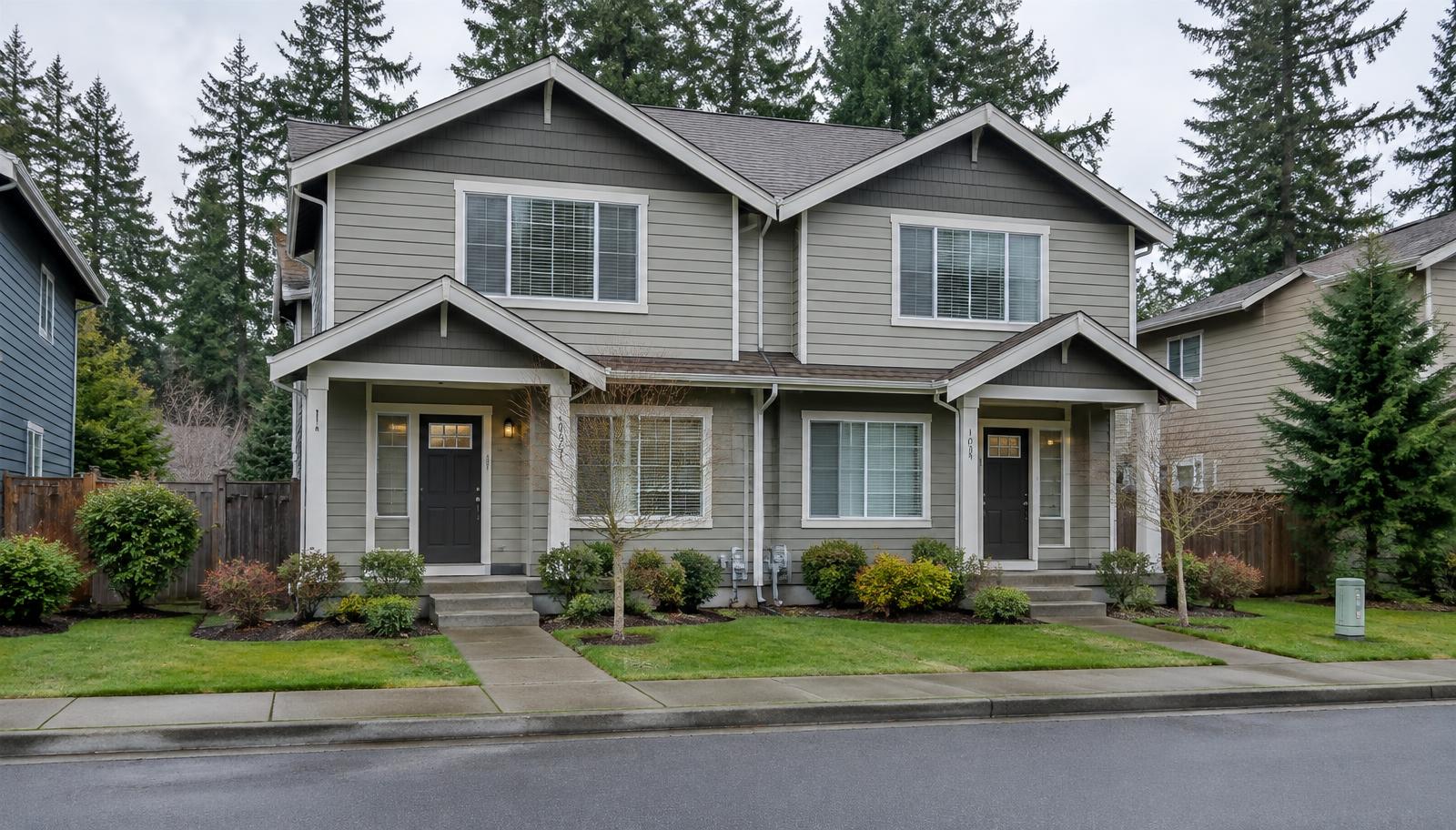
Conceptual illustration (not actual listing, bill, market data, or return proof): Bellevue property taxes should be based on the specific property and official records for the given year.
How Property Tax Is Calculated
Washington State's local property tax is an ad valorem system where tax burdens are allocated across tax districts based on assessed values: Various government entities—school districts, municipalities, fire districts, library districts, park districts, etc.—within each Tax Code Area (TCA) propose annual budgets, which are converted by county authorities into a "levy rate per $1,000 of assessed value." This rate is then multiplied by the parcel's assessed value to determine the tax due. Even within the same city, adjacent properties may fall under different TCAs due to variations in school, fire, or Local Improvement District (LID) boundaries, resulting in different combined rates.
Thus, any claim like "Bellevue averages roughly X percent" is only a general reference and cannot replace verification. The correct process is to first confirm the parcel's TCA code, then cross-check the current assessed value published by the King County Assessor and the actual amount on the King County Treasury tax statement. Since assessed values and agency budgets adjust annually, historical statements serve only as trend references, not future guarantees. For budgeting, use the most recent official tax statement as a baseline, then allow flexibility for future assessment increases and new school bond levies—avoid linear projections over 5-10 years.
Assessed Value, Market Price, and Sale Price Differences
Market price reflects what the open market might yield at a given time; sale price is the actual transaction result; assessed value is the figure determined by the county tax assessment system for taxation purposes within defined cycles. These concepts differ—assessed values aim for equitable tax distribution, not predicting future sale prices.
No universal rule like "assessed values are always X% below market price" exists. The gap between assessed and market values fluctuates with property type, market activity, and assessment cycles—sometimes aligned, sometimes divergent. Don’t assume lower assessments guarantee permanent tax advantages, or higher ones indicate property flaws; verify with official records.
Post-purchase, assessed values don’t automatically adjust to sale prices. The Assessor follows its own cycles and methods; the next section details verification steps.
Four-Step Verification by Address
- Step 1: Locate the parcel: Search King County’s official property records using the full address or parcel number to confirm the target property, not adjacent or similarly named parcels.
- Step 2: Verify current records: Check the tax year, current assessed value, land/building breakdown, and levy code against the active tax statement. Note that assessment and tax years often differ.
- Step 3: Review trends but avoid guarantees: Pull historical assessed values and paid amounts to understand fluctuations or major adjustments, but don’t treat them as future commitments or caps.
- Step 4: Confirm lender escrow arrangements: For financed purchases, request the lender’s escrow analysis to understand how monthly tax/insurance estimates are calculated and potential payment adjustments during future escrow analyses.
Understanding Key Tax Statement Fields
King County tax statements typically include these fields; understanding each helps trace the amount’s origin:
- Parcel number: The unique identifier for all queries/appeals—more precise than addresses.
- Assessment year vs. tax year: Assessed values are usually determined the prior year for the next year’s taxes—don’t conflate the two.
- Levy code: Indicates the combination of school, municipal, fire, and other districts governing the parcel’s rate.
- Land and improvement values: Listed separately; their sum is the total assessed value for tax calculations.
- Exemptions/reductions: E.g., senior or disability exemptions—if applicable, these appear on statements but require official eligibility confirmation.
- Payment due dates: Taxes are typically split into two installments; late payments incur penalties. Verify sellers/prior owners have paid current/past dues during transactions.
For unexplained adjustments (e.g., new special assessments or bond levies), contact King County Treasury or Assessor directly—don’t speculate.
Appeal Deadlines and Materials for Assessed Value
If a parcel’s assessed value seems inaccurate, owners may appeal to the Board of Equalization within the published notice period. King County states appeals are generally due by July 1 of the assessment year or within 60 calendar days of the assessment change notice—whichever is later. As of September 22, 2026, this rule stands; always verify with the current year’s notice and Board of Equalization guidelines.
Common supporting materials include:
- Recent assessed values and sales of comparable properties;
- Independent appraisals for physical condition issues affecting value;
- Documents proving errors in square footage, room count, or construction year;
- Reports on recent repairs or structural problems impacting value.
Success depends on evidence quality, timely submission, and Board review—no outcomes are guaranteed. Late submissions are typically denied; review assessment notices promptly.
Comparing Cities Requires Consistent Metrics
When comparing Bellevue, Kirkland, or Issaquah, use like properties, the same tax year, and parcel-specific data—not city-wide medians or vague percentages. Isolated rate comparisons overlook assessed value bases, HOA fees, insurance, and maintenance differences, skewing conclusions.
| Item | Property A | Property B |
|---|---|---|
| Type & Age | Keep comparable | Keep comparable |
| Assessed Value | Official parcel | Official parcel |
| Tax District & Year | Same year | Same year |
| Annual Tax Statement | Verify | Verify |
| HOA/Insurance/Maintenance | Add separately | Add separately |
School ratings, commute times, and amenities are often oversimplified alongside taxes—these are lifestyle judgments, not tax facts. Verify school boundaries via district websites.
Incorporating Property Tax and HOA into Monthly Budget
Lenders may collect property taxes and insurance via escrow accounts, but these amounts aren’t fixed. Annual escrow analyses adjust payments if actual taxes/insurance rise.
HOA fees are separate—review coverage (exteriors, roofs, amenities, some insurance), reserve health, and special assessments. Underfunded HOAs risk unexpected charges; request reserve studies and meeting minutes pre-purchase.
Break down annual taxes, HOA, insurance, maintenance reserves, and loan payments separately before consolidating into total ownership costs—avoid lumping them into a vague "monthly payment" to pinpoint changes.
Full Cost-of-Ownership Table with Replicable Assumptions
Below are key Bellevue ownership cost components—all figures require official documents or written quotes. Data sources and update frequencies help build verifiable models; example numbers are hypothetical.
| Cost Item | Source | Update Frequency |
|---|---|---|
| Annual Property Tax | King County Assessor/Treasury | Annual potential changes |
| Loan Principal & Interest | Loan contract/statement | Fixed rates: stable; adjustable: varies |
| Home Insurance | Insurer quotes/renewals | Annual potential adjustments |
| HOA Fees | HOA bills/reserve reports | Per HOA budget; may include special assessments |
| Maintenance Reserves | Owner planning (inspection reports help) | Property-dependent |
| Escrow Adjustments | Lender escrow analysis | Lender’s annual review |
Replicable Example (illustrative only): For a $900,000 assessed value and $10/$1,000 levy rate, annual tax = $9,000 ($750/month). With $4,200/month loan, $1,800/year insurance ($150/month), $400/month HOA, and $450/month maintenance, total monthly cost = $5,950 ($71,400/year). Formula: $4,200 + ($9,000÷12) + ($1,800÷12) + $400 + $450 = $5,950. If loan payments include tax/insurance escrow, don’t re-add $750 and $150—escrow true-ups are cash flow timing, not additional costs.
Maggie Sun, Managing Broker
| Item | Monthly | Annual |
|---|---|---|
| Mortgage P&I | $4,200 | $50,400 |
| Property Tax | $750 | $9,000 |
| Insurance | $150 | $1,800 |
| HOA | $400 | $4,800 |
| Maintenance Budget | $450 | $5,400 |
| Total | $5,950 | $71,400 |
Common Misconceptions
- Misconception 1: Multiplying city average tax rates by purchase price yields neither assessed value nor official tax amount—only directional estimates.
- Misconception 2: Assuming assessed values immediately reset to purchase price post-sale, when assessors follow independent cycles and methodologies.
- Misconception 3: Equating school rankings with property tax rates—school levies are just one component among many, and boundaries require address-specific verification.
- Misconception 4: Confusing REET, FIRPTA with annual property taxes—these respectively represent transaction-based state/local excise tax, federal withholding for foreign sellers, and recurring local property taxes, each with distinct responsible parties.
- Misconception 5: Overlooking HOA reserves and special assessments while focusing solely on current monthly fees, thereby underestimating true ownership costs.
- Misconception 6: Treating historical tax bill increases as guaranteed future trends—past patterns are merely reference points.
Do Not Conflate Other Tax Issues
Annual property taxes, seller-paid Real Estate Excise Tax (REET), federal FIRPTA withholding, rental income tax, and 1031 Exchanges are separate matters. REET is a Washington State transfer tax typically paid by sellers at closing, comprising state-tiered rates plus applicable local portions—distinct from recurring local property taxes in both collection timing and calculation.
FIRPTA generally applies when sellers qualify as "foreign persons" under U.S. tax code, requiring buyers/transferees to handle federal withholding and reporting, with statutory exceptions. Professional tax/legal counsel must determine applicability. Note: Washington’s capital gains tax excludes real estate transactions—related capital gains fall under federal income tax rules.
Depreciation, interest deductions, expense write-offs, IRC §121 primary residence exclusions, or 1031 Exchange eligibility all depend on taxpayer status and transaction specifics. Real estate brokers cannot substitute CPAs or tax attorneys—refer such matters to qualified professionals.
FAQs
How much are Bellevue property taxes annually?
Answers require the specific home’s assessed value and tax code district—never derive ranges from median prices or internet percentages.
Will assessed values immediately reset to purchase price after buying?
Never assume automatic 1:1 adjustments. Assessors follow independent cycles—refer to King County’s valuation process and subsequent official notices.
Do better school districts always mean higher property taxes?
No. Tax bills combine multiple levy components, with schools being just one factor. Verify school boundaries via district websites—city names alone are unreliable.
What if my assessed value is incorrect?
File appeals with the Board of Equalization during designated periods, submitting comparable sales, independent appraisals, or documented errors—late submissions are typically rejected.
Are REET and annual property taxes the same?
No. REET is a one-time transfer tax (usually seller-paid) with state/local components, while property taxes are recurring local levies—different collection points, calculations, and responsible parties.
What tax issues should foreign buyers/sellers note?
If sellers are "foreign persons," FIRPTA generally requires buyers/transferees to handle federal withholding/ reporting, with exceptions requiring professional determination—this falls outside local property taxes.
Are HOA fees included in property taxes?
No. HOA fees are separate community charges—review coverage, reserves, and special assessments separately, then combine with taxes, insurance, and mortgage for total ownership costs.
Are escrow property tax payments fixed?
Typically not. Lenders annually recalculate escrow—if actual taxes/insurance rise, subsequent payments and monthly installments adjust accordingly.
Sources
- King County Assessor — Valuation, tax codes, lookup guides
- King County Treasury Operations — Tax bills, payments, deadlines
- Washington Department of Revenue — REET rules (separate from property taxes)
- IRS FIRPTA — Withholding and exceptions for foreign sellers
This provides general information only—not legal, tax, lending, or investment advice. Verify specific property taxes, school boundaries, loan terms, and outcomes with relevant professionals and agencies before transacting.